

ADVANCING A HEALTHIER TOMORROW

OUR WORK

Advancing research. Improving lives.
A healthier, more equitable world.

The Global Challenge of Tuberculosis

Infectious diseases, antimicrobial resistance and persistent health inequities threaten millions of lives. Tuberculosis remains one of the world’s deadliest infectious diseases — and ending it requires a comprehensive, person-centered approach.

10.7 million

People developed TB in 2024

1.23 million

TB deaths in 2024

390,000

MDR/RR-TB cases in 2024

Understanding the challenge

Infectious diseases, antimicrobial resistance and the global TB burden

Infectious diseases remain among the greatest threats to global health, causing millions of deaths each year and placing enormous strain on health systems, economies, and communities worldwide. While remarkable advances have been made in vaccines, diagnostics, and treatments, new infectious threats continue to emerge, and longstanding diseases remain difficult to control. At the same time, antimicrobial resistance (AMR) has become one of the defining public health challenges of the 21st century. As bacteria, viruses, fungi, and parasites increasingly develop resistance to existing medicines, once-treatable infections are becoming more difficult and, in some cases, impossible to cure. The World Health Organization (WHO) has identified AMR as one of the world's top global health threats, emphasizing an urgent need for continued scientific innovation, stronger health systems, and coordinated international action.

Among these challenges, tuberculosis (TB) remains one of the world's deadliest infectious diseases and a major driver of antimicrobial resistance. Despite being both preventable and curable, TB continues to exact an enormous human and economic toll. According to the WHO Global Tuberculosis Report 2025 WHO source, an estimated 10.7 million people developed tuberculosis in 2024, including approximately 5.8 million men, 3.7 million women, and 1.2 million children, and 1.23 million people died from the disease. Tuberculosis reclaimed its status as the world's number one infectious disease killer in 2023, after having been temporarily surpassed by COVID-19 in previous years. Although global TB services have largely recovered from the disruptions caused by the COVID-19 pandemic, progress remains far too slow to achieve the targets outlined in the WHO End TB Strategy and the United Nations Sustainable Development Goals.

Health inequity

Tuberculosis is far more than an infectious disease; it is also a disease of inequity. The burden of TB falls disproportionately on people experiencing poverty, undernutrition, overcrowded housing, poor working conditions, limited access to healthcare, and other social and economic vulnerabilities. These social determinants of health increase the risk of developing TB, delay diagnosis, complicate treatment, and contribute to poorer health outcomes. Increasingly, global health experts recognize that ending TB requires addressing not only the disease itself, but also the underlying conditions that allow it to persist.

Tuberculosis and diabetes

Tuberculosis also increasingly intersects with other chronic health conditions that complicate prevention, treatment, and recovery. Along with HIV, diabetes mellitus (DM) has emerged as one of the most important comorbidities associated with TB. People living with diabetes are approximately two to four times more likely to develop active tuberculosis and often experience delayed recovery, treatment failure, relapse, and death compared to individuals without diabetes. As diabetes prevalence continues to rise globally, particularly across many high TB burden countries, integrating tuberculosis and diabetes services has become an international public health priority. The WHO now recommends coordinated screening, diagnosis, treatment, and long-term management of both conditions to improve patient outcomes and strengthen health systems.

Drug resistance

Drug-resistant tuberculosis represents one of the most serious manifestations of the broader antimicrobial resistance crisis. The emergence of strains resistant to the most effective first-line medicines threatens decades of progress in TB control. According to the  WHO an estimated 390,000 people developed multidrug- or rifampicin-resistant tuberculosis (MDR/RR-TB) in 2024, and treatment remains lengthy, complex, expensive, and often associated with significant physical, emotional, and financial burdens for patients and their families. While important advances in diagnostics and shorter, all-oral treatment regimens are improving care, drug-resistant TB continues to pose a major public health and global health security challenge.

A comprehensive, person-centered response

These interconnected challenges highlight the need for person-centered models of care that extend beyond medical treatment alone. Successful tuberculosis control requires addressing the whole person by integrating clinical care with patient education, nutrition, psychosocial support, caregiver engagement, peer support, management of comorbidities, and interventions that reduce the social and economic barriers preventing individuals from accessing and completing treatment. At the same time, continued investment in research, innovation, education, and strategic partnerships is essential to accelerate the development of new tools and improved treatment regimens while ensuring they reach the people who need them most.

At the Mueller Health Foundation, we believe ending tuberculosis requires a comprehensive approach that bridges scientific discovery, implementation research, person-centered care, education, and global collaboration. Through strategic investments in innovative research, community-based programs, education, and partnerships with leading academic institutions and nonprofit organizations, we are committed to advancing solutions that improve prevention, diagnosis, treatment, and long-term health outcomes for individuals and communities affected by tuberculosis around the world.

A healthier tomorrow is possible.

Explore how our research, care programs, education and partnerships are making a difference.

OUR APPROACH

Three strategies. One healthier tomorrow.

Ending tuberculosis requires more than scientific discovery alone. It demands innovation across the entire continuum of care from advancing research and translating evidence into practice, to addressing the social determinants of health and ensuring that every individual has access to compassionate, person-centered care.

At the Mueller Health Foundation, we believe lasting progress is achieved by investing in innovative research, strengthening community-based programs, expanding access to evidence-based education, harnessing technology and data, and building strategic partnerships that improve health outcomes around the world.

Our work is guided by three interconnected strategies that together move promising ideas from scientific discovery to real-world impact.

Advance Science

Support translational research to develop new tools, treatments and approaches for tuberculosis.

Transform Care

Expand access to person-centered care that integrates TB treatment with broader health needs.

Share Knowledge

Create and share evidence, resources and learning opportunities to strengthen the global response.

Different paths. A more equitable tomorrow.

OUR IMPACT

Advancing the Global Fight Against Tuberculosis

Since its founding in 2015, the Mueller Health Foundation has invested in innovative research, community-based programs, education, and strategic partnerships to accelerate progress toward a world free of tuberculosis. By supporting the full continuum from scientific discovery to patient care and public education, we work to improve lives, strengthen health systems, and help shape the future of TB prevention, diagnosis, treatment, and care.

Over the past decade, our investments have supported groundbreaking research, expanded access to person-centered care, strengthened educational resources, and fostered collaborations that extend far beyond the communities we directly serve.

Our Impact at a Glance

$6 Million +

Invested in tuberculosis research and programs

10+ Years

Supporting the global fight against TB

200+

Free educational resources available through the TBConnect blockchain platform

500+

People with tuberculosis and diabetes enrolled in our integrated TB-DM care program with REACH in India

350+

People receiving ongoing diabetes management and follow-up through our REACH TB-DM initiative in India

1,000,000+

People reached through educational and awareness campaigns across social media platforms and at in-person events.

20+ Partnership

Major strategic partnerships with academic institutions, non-profits, and healthcare focused organizations.

Multiple Countries

Research, education, and implementation projects supported across North America, Africa, and Asia.


Countless Lives

Improved through research, education, innovation, and person-centered care.

Creating Impact Across the TB Care Continuum

Accelerating Scientific Discovery

Scientific research is essential to ending tuberculosis. Since inception, the Mueller Health Foundation has invested in research exploring host-directed therapies, novel drug combinations, intracellular screening platforms, and innovative approaches to combating drug-resistant tuberculosis. These collaborations have contributed to scientific publications, advanced laboratory models, and promising discoveries that may help shape future TB treatment strategies.

Improving Patient Care

Our programs place people, not diseases, at the center of care.

Through our partnership with REACH in India, we support comprehensive models of care that combine medical treatment with patient education, psychosocial counseling, nutritional support, caregiver engagement, peer mentorship, and ongoing follow-up. These initiatives help patients overcome barriers to treatment while generating evidence to improve TB care worldwide.

Highlights from our programs include:

  • Hundreds of individuals receiving integrated TB-diabetes services.
  • Strong participation in ongoing diabetes and TB monitoring and follow-up.
  • Community-based support for people undergoing treatment for drug-resistant tuberculosis.
  • Evaluation of long-term health outcomes following DR-TB treatment to improve future care.

Expanding Access to Knowledge

Knowledge saves lives.

The Mueller Health Foundation believes that high-quality tuberculosis information should be freely available to everyone. Through the TBConnect blockchain platform and other educational initiatives, we make evidence-based resources accessible to healthcare professionals, researchers, educators, students, patients, caregivers, and advocates around the world.

Today, TBConnect includes:

  • 200+ educational resources
  • Information spanning prevention, diagnosis, treatment, pediatric TB, drug-resistant TB, latent TB infection, TB-diabetes, stigma reduction, and emerging research.
  • Freely accessible educational content for a global audience.

Building Strong Partnerships

Our impact is made possible through collaboration.

We are proud to partner with organizations that share our commitment to ending tuberculosis, including:

  • Cornell University
  • Rutgers University
  • REACH (India)
  • APOPO
  • New York City Department of Health and Mental Hygiene
  • NYC TB Free Coalition
  • The Stop TB Partnership
  • Boston Children’s Hospital
  • Biotech and pharmaceutical companies
  • Healthcare providers
  • Nakshatra Centers in India
  • Researchers
  • Community organizations

Together, these partnerships strengthen research, improve patient care, and expand access to education across diverse settings.

Supporting Innovation

The Foundation actively invests in innovative solutions that improve TB prevention, diagnosis, treatment, and care.

Examples include

  • Novel host-directed therapies
  • Integrated TB-diabetes care
  • Community-based drug-resistant TB support
  • Innovative tuberculosis detection through APOPO’s HeroRats
  • Digital educational platforms that improve access to TB knowledge

Looking Ahead: Our Commitment

Tuberculosis remains one of the world's deadliest infectious diseases, but progress is possible through collaboration, innovation, and sustained investment.

The Mueller Health Foundation remains committed to advancing research, strengthening person-centered care, expanding educational opportunities, and supporting partnerships that accelerate progress toward a future free from tuberculosis and other infectious diseases.

Together with our partners, we will continue working to transform scientific discovery into meaningful impact for individuals, families, and communities around the world.

STORIES OF IMPACT

Real people. Real progress. A healthier tomorrow.

Our work is about people — the patients, families, communities and partners who inspire us. Explore stories of impact from our programs around the world.

Beyond Medicine

Transforming Tuberculosis Care Through Integrated Diabetes Management

Helping people living with both tuberculosis and diabetes achieve better health through comprehensive, person-centered care.

503 people enrolled86% three-month follow-up

Supporting the Whole Person

Reimagining Care for Drug-Resistant Tuberculosis

Demonstrating that addressing social determinants of health is essential to improving outcomes for people living with drug-resistant tuberculosis.

359 people supported87% treatment success

Healthier people, stronger communities — a more equitable world is possible.

Advance Science

Scientific discovery is the foundation for improving the prevention, diagnosis, treatment, and ultimately the elimination of tuberculosis.

The Mueller Health Foundation supports innovative research that advances our understanding of tuberculosis biology, drug resistance, host-pathogen interactions, diagnostics, therapeutics, epidemiology, and emerging treatment strategies. We are particularly interested in translational research that bridges laboratory discoveries with real-world clinical applications and has the potential to improve patient care and public and global health.

We foster collaborations among academic institutions, healthcare providers, nonprofit organizations, industry partners, and public health agencies to accelerate scientific discovery and translate research into meaningful impact for individuals and communities affected by tuberculosis.

Examples include

  • Novel therapeutics and host-directed therapies
  • Drug discovery and translational research
  • Drug-resistant tuberculosis research
  • Tuberculosis-diabetes research
  • Strategic research collaborations with leading academic institutions

Transform Care

Successful tuberculosis care depends on far more than effective medicines.

People living with tuberculosis often face complex challenges related to poverty, undernutrition, chronic disease, stigma, transportation, mental health, and limited access to healthcare. These social determinants of health can significantly influence whether individuals are diagnosed early, remain engaged in care, complete treatment, and fully recover.

The Mueller Health Foundation supports comprehensive, community-based programs that address these barriers through integrated, person-centered models of care. Our initiatives combine clinical care with patient education, psychosocial support, nutritional assistance, caregiver engagement, peer support, coordinated management of comorbidities such as diabetes, and ongoing follow-up throughout the treatment journey.

By investing in programs that treat the whole person, not just the disease, we aim to develop innovative models of care that improve health outcomes, strengthen quality of life, and can be adapted and scaled in high-burden settings around the world.

Examples include

  • Community-based drug-resistant TB care
  • Integrated tuberculosis-diabetes care
  • Peer support and caregiver engagement
  • Post-treatment recovery initiatives
  • Addressing the social determinants of health
  • Person-centered models of care

Share Knowledge

Knowledge has the power to save lives, but only when it is accessible, evidence-based, and translated into action.

The Mueller Health Foundation is committed to harnessing education, technology, and data to accelerate progress in the global fight against tuberculosis. We support innovative approaches that improve access to high-quality information, strengthen program evaluation, facilitate knowledge sharing, and promote evidence-based decision-making across research, clinical care, and public health.

Through initiatives such as the TBConnect educational blockchain platform, scientific communications, education and awareness campaigns, and collaborative partnerships, we help translate complex research into practical resources for healthcare professionals, researchers, policymakers, students, patients, advocates, and communities around the world. We also recognize the growing role of data science, artificial intelligence, digital technologies, and rigorous monitoring and evaluation in improving tuberculosis programs, measuring impact, identifying best practices, and informing future innovation.

By combining education with technology, data, and global collaboration, we aim to strengthen partnerships, reduce barriers to knowledge, improve transparency, and ensure that scientific advances translate into meaningful improvements in patient care.

Examples include

  • TBConnect digital education blockchain platform
  • Research translation and scientific communications
  • Public awareness and health education
  • Monitoring, evaluation, and program learning
  • Data-driven decision-making
  • Artificial intelligence and digital innovation
  • Global partnerships and knowledge sharing

Beyond Medicine

Helping people living with both tuberculosis and diabetes achieve better health through comprehensive, person-centered care.

For millions of people worldwide, tuberculosis is only one part of a much larger health journey. Diabetes mellitus has emerged as one of the most significant risk factors for developing active tuberculosis, while also making treatment more difficult. Individuals living with both diseases are more likely to experience delayed recovery, treatment failure, relapse, and death.

Yet historically, tuberculosis and diabetes have been managed separately, requiring patients to navigate multiple healthcare systems while facing many of the same social and economic challenges that contribute to poor health outcomes.

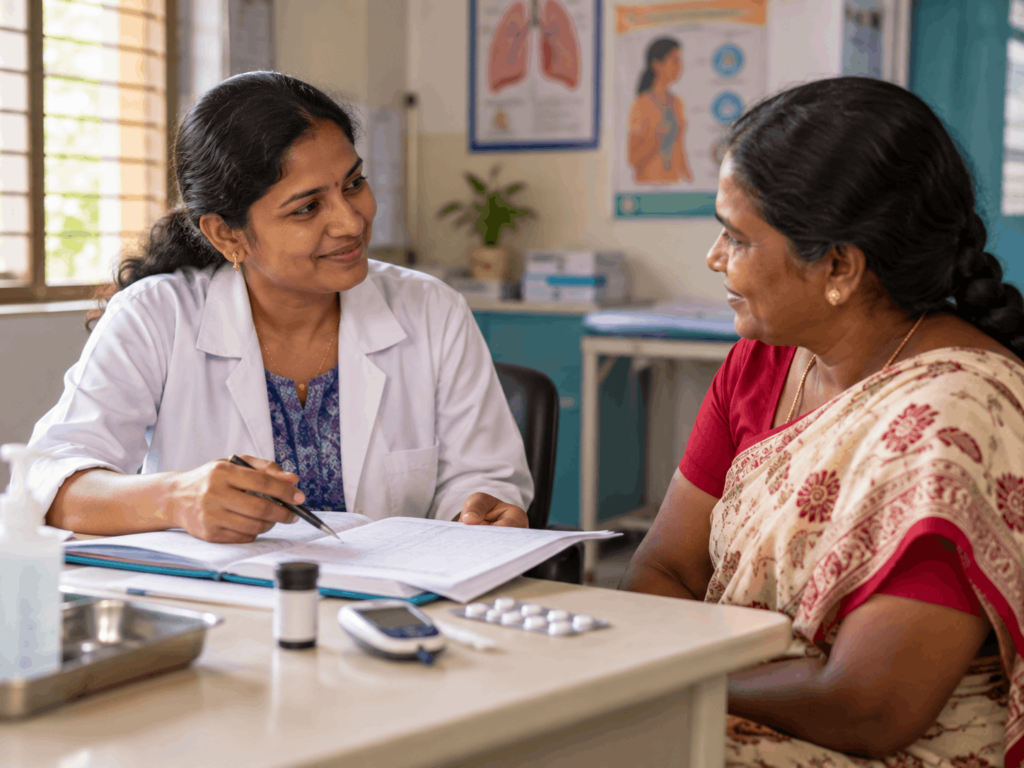
Recognizing the need for a different approach, the Mueller Health Foundation is partnering with REACH in Chennai, India, to develop an innovative model of integrated TB-diabetes care that places people, not diseases, at the center of treatment.

The program combines routine diabetes screening and monitoring with individualized education, nutrition counseling, healthy lifestyle coaching, caregiver engagement, peer support, and coordinated clinical follow-up throughout tuberculosis treatment. By integrating these services into routine TB care, the program helps patients better manage both conditions while reducing barriers that often prevent successful treatment.

Importantly, the program recognizes that health is shaped by more than medical care alone. Food security, health literacy, family support, chronic disease management, and access to ongoing care all influence whether someone is able to successfully complete treatment and recover. By addressing these social determinants of health alongside clinical care, the partnership is helping create a more comprehensive and compassionate model of tuberculosis care.
Impact Snapshot

Integrated TB-Diabetes Care Initiative in Chennai, India

Early Impact

  • 503 people enrolled in the program
  • 86% completed 3-month diabetes follow-up
  • 83% increase in stringent glycemic control
  • Nearly 40% reduction in poor glycemic control
  • 52% of participants demonstrated improved glycemic control

Person-Centered Services Include

  • Routine diabetes monitoring
  • Nutrition and lifestyle counseling
  • Individualized patient education
  • Caregiver engagement
  • Peer support
  • Coordinated TB and diabetes care

Goal

Improve diabetes management while strengthening tuberculosis treatment outcomes and overall patient well-being.

Early Findings

The program has already demonstrated remarkable patient engagement and encouraging improvements in diabetes management:

✅ 503 individuals living with both tuberculosis and diabetes have been enrolled in the program.

✅ 86% of eligible participants (308 of 359) completed their 3-month diabetes follow-up assessment, demonstrating strong engagement in ongoing TB-diabetes care.

✅ By the 3-month follow-up, the number of participants achieving stringent glycemic control increased from 66 to 121 individuals—an 83% improvement.

✅ The number of participants with poor glycemic control declined by nearly 40% over the first three months, falling from 183 to 112 individuals.

✅ Among participants with complete 3-month follow-up data (N=225), 52.4% (118 patients) experienced an overall improvement in glycemic control, while only 12.0% (27 patients) experienced worsening control.

✅ Individuals with newly diagnosed diabetes responded particularly well to the intervention, with 58% demonstrating improved glycemic control compared with 36% of those with previously known diabetes.

✅ Participants diagnosed with diabetes within the previous year showed the greatest improvement, with 73% achieving better glycemic control during follow-up.

✅ Patients with clinically confirmed TB had higher rates of improved glycemic control (65%) than those with microbiologically confirmed disease (46%).

✅ Participants with extrapulmonary TB demonstrated slightly greater improvement in blood sugar control (61%) than those with pulmonary TB (51%).

✅ By the 6-month follow-up, the number of participants achieving stringent glycemic control had more than doubled, increasing from 32 to 66 individuals.

✅ Over the same six-month period, the number of participants with poor glycemic control was reduced by nearly half, decreasing from 97 to 50 individuals.

✅ The program continues to evaluate how improved diabetes management influences tuberculosis treatment outcomes, recovery, and long-term health.

✅ While the study is ongoing, these early findings suggest that integrating diabetes management into TB care can improve patient engagement while supporting better overall health.

Why It Matters

Tuberculosis cannot be treated in isolation.

For individuals living with diabetes, successful TB treatment depends not only on effective antibiotics but also on controlling blood sugar, improving nutrition, strengthening health literacy, and supporting patients throughout their treatment journey.

By integrating diabetes management directly into TB care, the Mueller Health Foundation and REACH are demonstrating that addressing the social determinants of health can improve patient engagement, empower individuals to better manage chronic disease, and create healthier futures for people living with both tuberculosis and diabetes. As the global burden of TB-diabetes continues to grow, this innovative model has the potential to inform integrated care programs far beyond the communities currently served.

Supporting the Whole Person

Demonstrating that addressing social determinants of health is essential to improving outcomes for people living with drug-resistant tuberculosis.

Drug-resistant tuberculosis (DR-TB) is one of the world’s most challenging infectious diseases to treat. Treatment often lasts many months, involves multiple medications with significant side effects, and places tremendous emotional, physical, and financial strain on patients and their families.

For many individuals, the greatest obstacles are not simply medical; they are social.

Transportation costs, lost income, food insecurity, stigma, mental health challenges, caregiver responsibilities, and limited access to supportive services can all make completing treatment extraordinarily difficult.

Recognizing these realities, the Mueller Health Foundation is partnering with REACH to develop a comprehensive community-based model of person-centered care that supports individuals throughout every stage of the DR-TB treatment journey.

Rather than focusing solely on medications, the program provides individualized counseling, psychosocial support, nutritional assistance, transportation support, peer mentorship, caregiver education, and close coordination with healthcare providers. By reducing barriers that interfere with treatment, the program helps patients remain engaged while improving both their health and overall well-being.

The partnership also recognizes that recovery does not end when treatment is completed. Individuals who survive drug-resistant tuberculosis often continue to experience physical limitations, long-term medication side effects, emotional challenges, and difficulties returning to daily life. To better understand these long-term needs, we have recently expanded the program to evaluate health outcomes after treatment completion, thereby helping to ensure that recovery continues beyond cure.

Impact Snapshot

Community-Based DR-TB Care Program in Chennai, India

Early Impact

  • 359 individuals have received or are currently receiving comprehensive community-based support during drug-resistant TB treatment
  • To date, 119 people have successfully completed DR-TB treatment and entered long-term recovery.
  • The program achieved an impressive 87% treatment success rate among people with drug-resistant tuberculosis, approximately 12 to 19 percentage points (16–28%) higher than the estimated national average for DR-TB treatment in India.
  • Only 2% of patients were lost to follow-up.
  • 77 DR-TB survivors completed a post-treatment assessment evaluating long-term health, functional status, adverse effects, and quality of life
  • 29 survivors reporting ongoing post-treatment symptoms are receiving continued follow-up to better understand long-term recovery needs

Person-Centered Services Include

  • Individual counseling
  • Psychosocial support
  • Nutritional assistance
  • Transportation support
  • Peer mentorship
  • Caregiver education
  • Side-effect management
  • Linkage to health and social services
  • Post-treatment follow-up and recovery assessment

Goal

Improve treatment adherence, quality of life, and long-term recovery for people living with drug-resistant tuberculosis.

Early Findings

Early program outcomes demonstrate the value of comprehensive, person-centered support:

✅ 359 individuals have received or are currently receiving comprehensive community-based support while undergoing treatment for drug-resistant tuberculosis.

✅ 119 people have successfully completed DR-TB treatment, representing an important milestone in their recovery journey.

✅ The program so far has achieved an impressive 87% treatment success rate among people with drug-resistant tuberculosis, approximately 12 to 19 percentage points (16–28%) higher than the estimated national average for DR-TB treatment in India.

✅ Only 2% of participants have been lost to follow-up.

✅ Building on this success, the program has expanded to include post-treatment follow-up, recognizing that many survivors continue to experience physical, psychological, and social challenges long after treatment ends.

✅ To date, 77 DR-TB survivors have completed a comprehensive post-treatment assessment evaluating long-term health outcomes, functional status, adverse effects, quality of life, and experiences with care.

✅ Early follow-up has identified 29 individuals reporting persistent post-treatment symptoms, helping inform ongoing clinical support while generating valuable evidence to improve recovery services for future patients.

✅ These findings are providing important new insights into life after DR-TB treatment and reinforcing the need for care models that support patients well beyond microbiological cure.

Why It Matters

Drug-resistant tuberculosis is not only a medical condition; it is also a social and economic challenge.

Patients often face barriers related to poverty, food insecurity, transportation, mental health, stigma, and limited social support that can prevent them from completing treatment. By addressing these social determinants of health alongside clinical care, the Mueller Health Foundation and REACH are helping people overcome obstacles that extend far beyond the disease itself.

This partnership demonstrates that person-centered care is not an optional addition to tuberculosis treatment: It is an essential component of improving outcomes, restoring quality of life, and building more equitable health systems. Furthermore, by extending support beyond treatment completion, the program is helping redefine what successful tuberculosis care looks like. Recovery is measured not only by cure, but also by an individual’s ability to regain health, function, and quality of life; a perspective that has the potential to shape future models of person-centered DR-TB care around the world.